Carrier Error Codes in Pomona, CA
Here is the answer A Carrier error code in Pomona, CA and ZIP 91766 comes from one of two places - a furnace board flashing a number on its amber LED, or an Infinity thermostat logging a fault like 178 or 179 - and Pomona Carrier HVAC reads it, meters the part, and gives a flat price, so call (213) 444-4051 or book online.
At a glance facts
- Carrier fault-code diagnosis across Pomona ZIPs 91766, 91767, 91768.
- Furnace flash codes: 13/33 limit, 14 ignition lockout, 31 pressure switch, 24 control fuse.
- Infinity numeric codes: 44 air-delivery restriction, 178 indoor comm, 179 outdoor comm.
- Diagnostic $139 - $200; most code repairs $150 to $400 same visit.
- Control or inverter board $400 - $2,000 when a board is genuinely failed.
- We confirm with a meter before replacing - no parts-cannon repairs.
- Hours Weekdays 7am-6pm, weekends 8am-2pm; common sensors and switches stocked on the truck.
What do Carrier error codes mean on a Pomona system?
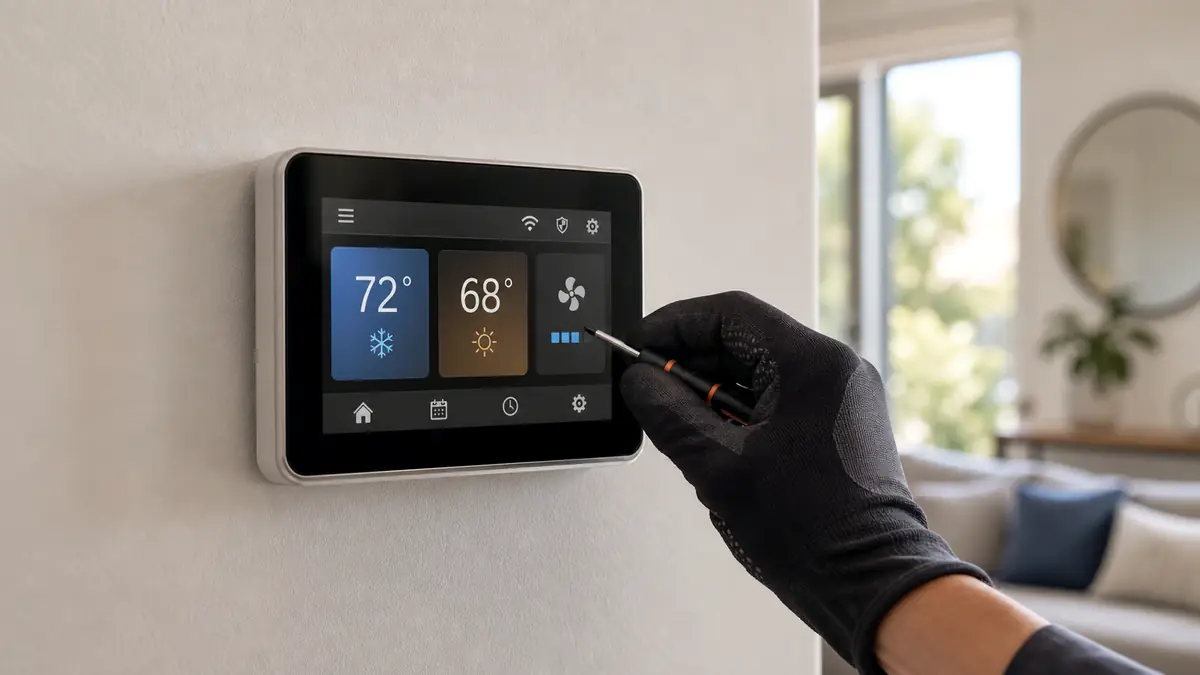
A Carrier error code is the system telling you which safety or sensor stopped it, before anyone opens a panel. In Pomona's older Lincoln Park and Wilton Heights homes the furnace usually speaks in flash codes - a number blinked on the amber LED behind the lower door. In the newer Phillips Ranch and Ganesha Hills two-story tract homes that run a Carrier Infinity or Greenspeed system, the same job is done by numeric codes the thermostat stores in its fault history. Reading the right one is the whole game: a flash code points at combustion and airflow on the heating side, while an Infinity numeric code points at communication and air delivery across the entire system. Match yours in the table, then read the deep page for the two codes we field most.
| Code | Means | First check | Cost lane |
|---|---|---|---|
| 13 / 33 | Limit circuit trip from overheating | Filter, return, blower airflow | $150 - $600 |
| 14 | Hard ignition lockout | Igniter resistance, gas on | $150 - $400 |
| 31 | Pressure switch did not prove draft | Inducer, flue, condensate trap | $150 - $700 |
| 34 | Flame sensed then lost | Clean or replace flame sensor | $150 - $350 |
| 24 | Control transformer fuse open | Short in 24V low-voltage wiring | $139 - $200+ |
| 44 | Excessive air-delivery restriction (Infinity) | Filter, dampers, duct sizing | $450 - $2,300 |
| 178 | Indoor communication fault (Infinity) | A-B-C-D wiring to indoor board | $400 - $2,000 |
| 179 | Outdoor communication fault (Infinity) | Comm wiring, condenser line voltage | $400 - $2,000 |
How do we read codes on a Carrier furnace versus an Infinity system?
On a 58- or 59-series furnace we pull the lower door, find the amber status LED on the integrated furnace control, and count the blink pattern - short flashes give the first digit, long flashes the second, so two long and a pause-then-one short reads as a 21-family fault. We log the code, then put a meter on the suspect part to confirm it before anyone buys a thing. On an Infinity or Greenspeed system there is no blinking LED to read; the codes live in the Infinity System Control. We step into Menu, then Service, then Fault, and read the stored numeric history with timestamps. That history is gold on intermittent faults - a Pomona system that drops out only on a 105 F afternoon will have logged a 179 outdoor-comm event even though it is running fine when we arrive. Either way the rule is the same: read first, meter second, replace last.
Why do these codes show up in Pomona homes specifically?
The far-eastern San Gabriel Valley runs hot and dry, and that climate drives the pattern of faults we see here. Long, hot inland summers push Infinity condensers in Phillips Ranch and Hacienda to their limits, and the heat plus afternoon voltage sag is exactly what surfaces outdoor communication faults like 179. On the heating side, the historic Craftsman and Spanish-revival homes around Lincoln Park were built before anyone sized a 14-inch return for a modern blower, so restricted airflow trips limit codes 13 and 33 every winter. Dust and the dry-season grit that blows in off the Inland Empire transition foul flame sensors fast, feeding 34 faults, and old furnaces with marginal inducers or sagging condensate traps throw 31 pressure-switch faults when the first cold morning arrives. The codes are universal; the frequency is local.
How do we fix the most common Carrier codes here?
The fix tracks the code, not a guess. A 13 or 33 limit trip starts with a filter and a static-pressure reading; if the duct is the bottleneck we correct airflow rather than swap a limit switch that was only doing its job. A 14 or 34 ignition fault usually ends as a flame-sensor clean or an igniter swap, both stocked and same-visit. A 31 pressure-switch fault means proving whether the inducer, the flue, the sensing tube, or a plugged condensate trap is the real culprit - detailed on the code 31 page. Infinity comm faults 178 and 179 are wiring jobs more often than board jobs; we ring out the conductors end to end before condemning a control - detailed on the code 179 page. When a board genuinely is dead, we say so and quote the $400 - $2,000 range up front. For full furnace work see the Carrier furnace page and the Infinity control page.
What can you safely check before calling about a code?
- Write down the exact code - flash count on the furnace, or the number in the Infinity fault history.
- Replace a dirty filter and clear any furniture off a return grille; airflow drives 13, 33, and 44.
- Confirm the furnace switch, breaker, and outdoor disconnect are on, and the door panel is fully seated.
- Reset once. If the code returns, leave the system off and call us with the code in hand.
When is a Carrier code urgent?
Most codes can wait a day; a few cannot. Any furnace rollout or repeated lockout that smells of gas is a stop-now call - shut the system off and phone us. A 179 outdoor-comm fault during a Pomona heat wave is urgent in practice because a no-cool home in 100 F-plus weather is a health risk for older residents, even though the fault itself is electrical. A 31 draft fault is a safe-shutdown by design - the furnace will not light without proving draft - so it is a same-week repair rather than an emergency, but do not bypass it. We carry common igniters, flame sensors, and pressure switches on the truck, so most code calls finish in one visit.
Pomona Carrier error-code FAQ
Where does a Carrier system show its error code in Pomona?
Two places. A 58- or 59-series gas furnace flashes a numeric code on the amber LED behind the lower door - count short and long flashes. A Carrier Infinity or Greenspeed system instead lists numeric faults like 178 or 179 in the thermostat fault history, under Menu, Service, Fault. We read whichever your system uses before quoting.
Are Carrier flash codes and Infinity numeric codes the same thing?
No, and mixing them up wastes money. Furnace board flash codes (13, 14, 31, 33) describe combustion and airflow faults on the heating side. Infinity numeric codes (178, 179, 44) are communication and air-delivery faults reported by the thermostat across the whole system. The number ranges do not overlap, so the source tells us which manual to open.
Can I clear a Carrier fault code myself?
You can try one reset. Cycle the furnace switch off for 30 seconds or, on Infinity, acknowledge the fault at the thermostat. If the same code returns, the underlying part is still failing and resetting only hides it. A code that clears and comes back within a day - common with 31 draft faults and 179 comm faults - needs a meter, not another reset.
How much does Carrier fault-code diagnosis cost in Pomona?
The diagnostic is $139 - $200 and covers reading the code, confirming the failed part with a meter, and a flat repair quote before any work. Most code-driven repairs - a flame sensor, pressure switch, or comm-wire fix - finish the same visit in the $150 to $400 range. A control or inverter board moves into the $400 - $2,000 range.