Carrier Furnace Not Heating in Pomona, CA
Here is the answer When a Carrier furnace stops heating in Pomona, CA and ZIP 91768, Pomona Carrier HVAC reads the amber-LED flash code first - codes 13, 14, 31, 33, and 26 each point to a different failure - then checks the igniter, flame sensor, and pressure switch, so call (213) 444-4051 or book a visit online. We serve Westmont, Hacienda, and all of Pomona.
At a glance facts
- No-heat diagnostics for Carrier 59-series furnaces across Pomona ZIPs 91766, 91767, 91768.
- Carrier amber-LED codes: 14 ignition lockout, 31 pressure switch, 13/33 limit, 26 rollout, 24 control fuse.
- Most common fixes: flame sensor and igniter ($150 to $350); pressure switch similar.
- Diagnostic $139 - $200; inducer or board work $400 - $2,000.
- Code 26 rollout is a safety stop - we inspect the heat exchanger before any restart.
- Hours Weekdays 7am-6pm, weekends 8am-2pm; we carry common igniters and sensors on the truck.
- In-warranty parts referred to authorized Carrier service first.
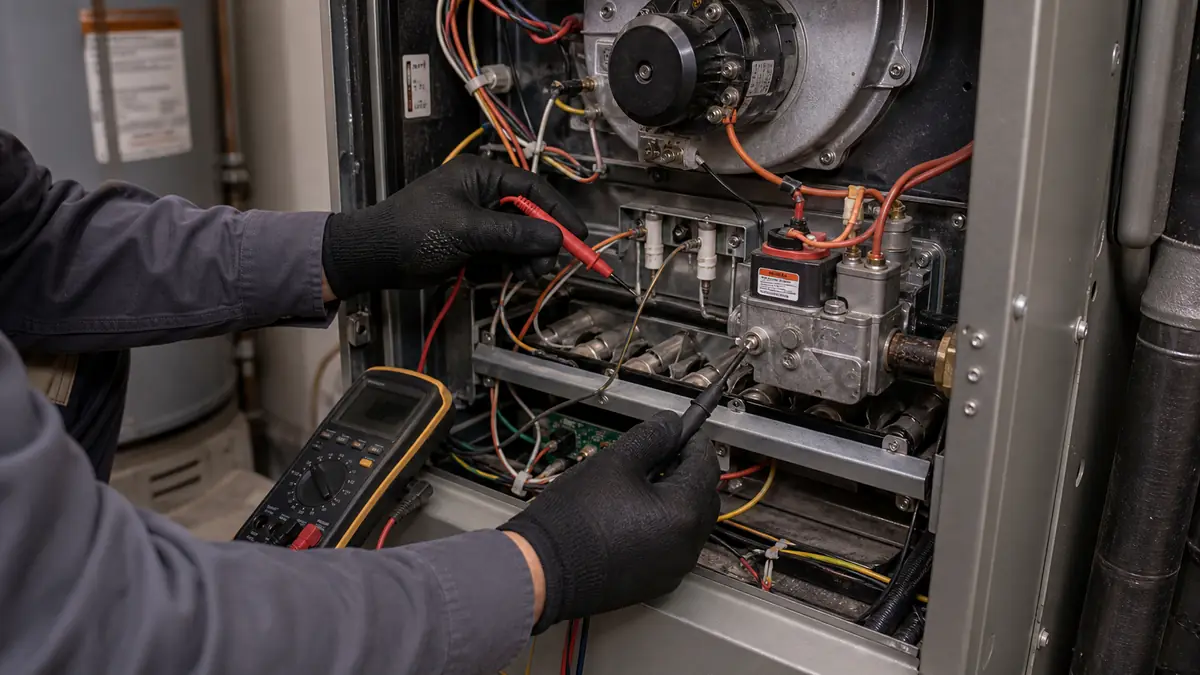
What does the flash code tell you?
Everything. The Carrier control flashes a two-digit code on its amber LED - short flashes for the first digit, long for the second. Reading it before you touch a part is the difference between a fast fix and a parts-cannon. Match yours below.
| Code | Likely cause / first check | Cost lane |
|---|---|---|
| 14 | Hard ignition lockout; igniter cracked or no flame established | $150 - $350 |
| 34 | Flame sensed then lost; clean or replace flame sensor | $150 - $350 |
| 31 | Pressure switch did not close; inducer, condensate trap, flue | $139 - $200+ |
| 13 / 33 | Limit circuit trip; dirty filter, low airflow, blocked vent | $139 - $200 |
| 26 | Rollout switch open; inspect heat exchanger (safety) | Quote after inspection |
| 24 | Control transformer fuse open; short in low-voltage wiring | $400 - $2,000 |
Why do igniters and flame sensors fail in Pomona?
Cycling and age. Even in Pomona's short heating season, the hot-surface igniter heats to over 2,000 F on every call and eventually micro-cracks; once it does, it reads open on an ohmmeter instead of the 40 to 90 ohms a healthy element shows cold. The flame sensor is a simple rod that proves flame via a 1-to-6-microamp rectification current; a film of oxidation drops that current below the control's threshold and triggers a code 34 shutdown, which is why a light scuff with steel wool revives many of them. Both are inexpensive, stocked parts, so these are usually same-visit repairs.
How does a no-heat fault tie into your summer cooling?
The same blower and filter that feed the 59-series furnace also feed your Carrier AC coil, so a no-heat call often surfaces a problem that will bite again in July. A clogged filter that trips the furnace high-limit (codes 13 and 33) in winter will starve the evaporator coil and freeze it in summer, and a tired ECM blower module ($450 - $2,300) that struggles to push warm air will choke cooling airflow just as badly when the Pomona heat hits 100 F. When we are in the cabinet for a winter lockout, we check static pressure and the blower command-versus-output so the shared air path is ready for the cooling season, not just the cold snap. See the frozen-coil fix and weak-airflow fix for the cooling side of the same components.
When is no heat a safety problem?
A code 26 rollout is the one to respect. It means flames rolled out of the burner box instead of drafting up the flue - possibly a blocked flue, a failed inducer, or a cracked heat exchanger that can leak carbon monoxide. We shut the furnace down, inspect the heat exchanger, and give you a straight answer on repair versus replacement. We do not bypass a safety switch to "get the heat back on." For replacement options see the Carrier furnace page and repair or replace.
What can you check before we arrive?
- Confirm the thermostat is set to heat and the batteries are good.
- Check the filter - a clogged filter trips the limit (codes 13 and 33).
- Make sure the furnace switch and breaker are on, and the door panel is fully seated.
- Note the LED flash code and reset once; if it locks out again, leave it off and call us.
What does a no-heat repair cost in Pomona?
Most no-heat fixes are inexpensive, stocked parts; the price climbs only when a motor or board is involved. The diagnostic is $139 - $200 and includes reading the flash code and metering the suspect part. A flame sensor or hot-surface igniter typically lands in the $150 to $350 range and finishes the same visit, and a pressure switch is similar. An inducer motor or an integrated furnace control board moves into the $400 - $2,000 range. A code 26 rollout gets no flat number until we inspect the heat exchanger, because that result decides repair versus replacement - we never quote past a safety code without looking. For replacement options see the Carrier furnace page.
Pomona no-heat FAQ
My Carrier furnace blower runs but blows cold air in Pomona - why?
The blower can run on a call while the burners never light or lock out. Check the amber LED for a code: 14 is an ignition lockout, 34 is ignition proving failure (dirty flame sensor), and 31 is a pressure-switch fault. The fan keeps cooling the heat exchanger, so cold air at the vents with the blower running points to a combustion-side problem.
Is it safe to keep resetting a Carrier furnace that keeps locking out?
Reset it once. If it locks out again, stop. Repeated resets on a code 26 rollout or a recurring 14 lockout can mean unburned gas or a heat-exchanger problem. A rollout switch exists to catch flames escaping the burner box, so a furnace that keeps tripping it needs eyes on the heat exchanger, not another reset.
How much does a no-heat furnace repair cost in Pomona?
The diagnostic is $139 - $200. A flame sensor or igniter typically lands in the $150 to $350 range, a pressure switch similar, and an inducer motor or control board higher. We read the code, confirm the failed part with a meter, and quote a flat price before replacing anything.
Why does my furnace work in the morning but quit later in Pomona?
Intermittent lockouts often trace to a marginal flame sensor or a pressure switch that sticks as the trap fills with condensate. The furnace runs cold, then as parts heat and cycle, the fault appears. We test the sensor microamps and the pressure-switch closing point to catch the failure that only shows up after the unit warms up.